

Choosing well - Navigating faith and the local elections
/In this article, Simon Carter explores how Christians might approach the upcoming local elections, drawing on research into Christian engagement with the electoral process. We hope this piece helps deepen your understanding of this important social issue and supports thoughtful, prayerful participation.
Blessings from Nottinghamshire, where twelve months on from our County Council elections we’re resorting to laughter as an antidote to crying. If local elections are happening in your patch on 7 May 2026, we’re hopeful you’ll have favourable outcomes. And do let me know if you don’t, because I’ll write some jokes to cheer you up.
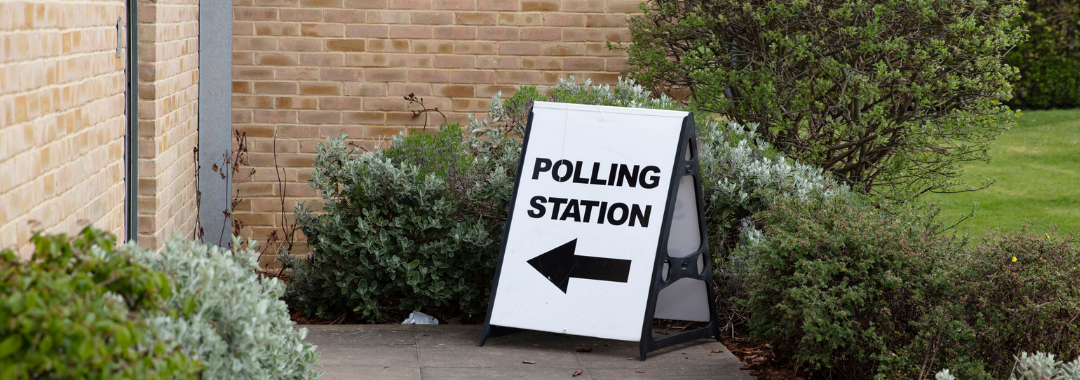
It might be a library, a village hall or a school gym for you. But wherever you cast your vote, don’t downplay its significance. The 2026 UK local elections are a big deal. 5,066 councillors will be elected in England across 2,969 wards, with 25,046 candidates standing and 140 political parties represented. Six mayoral elections are also taking place. 134 councils (plus two new Surrey authorities) have elections scheduled, including areas undergoing big structural changes in Essex, Hampshire, Norfolk, and Suffolk.
And if this wasn’t important enough, the English elections take place alongside the Scottish Parliament and Senedd Cymru elections, a rare and widespread day of decision across the UK which will shape everything from social care, to planning decisions, to how your local community is supported. Lots of candidates, lots of choices, lots of responsibility for voters.
How’s a UK-based Christian to vote?
If you’re in the ‘keep religion and politics apart’ camp I’d find it tough to disagree with you in a month where Trump has publicly attacked Pope Leo XIV over foreign policy and the Iran war, then posted an AI-generated image of himself as Jesus (update – Trump’s now deleted the image, saying it wasn’t him as Jesus, but him as ‘a doctor’).
I’m sorry. Easily distracted.
To be clear, I’m very much in the ‘religion and politics can’t be separated’ camp. To try to separate them feels like untying tightly knotted string and I’ve struggled with shoelaces since childhood.
For Christians, the imperatives placed upon people and nations by Jesus in Matthew 25 (give food and drink to the hungry and thirsty, welcome the stranger, clothe the naked, care for the sick, care for prisoners) are moral activities which, to me, come with direct political and social justice implications. If we’re to do these things as if they were to (and for) Jesus, I can’t see how I’d bring myself to vote for someone whose policies would have the effect of harming or mistreating the vulnerable – the opposite of what Jesus teaches. I won’t have directly harmed or mistreated my neighbour by voting. But won’t I have lent someone else a democratic mandate to do that on my behalf?
I know this seems simplistic (though Matthew 25 is really unambiguous to be fair), and I know there’s a balance to strike. If only there were a clear consensus among UK Christians to guide us.
A Christian concern
No significant new analysis on how UK Christians engage with politics has emerged since the 2024 General Election, but the research done then is still strikingly relevant two years on. Perhaps unsurprisingly, the concerns that Christians took with them into the polling booth back then have not gone away.
There’s the Evangelical Alliance’s Thinking Faithfully About Politics study, which found that evangelical Christians were deeply engaged in public life, feeling a responsibility to take part, to vote, to pray, and to let their faith shape their decisions. A central concern held by evangelicals emerging through the research was social justice – the desire to support the vulnerable and the overlooked and to alleviate their struggling.
There’s the Christian Institute’s Election Briefing 2024, an analysis of party policies on key issues of importance to Christians, which placed emphasis on a Christian responsibility to vote, alerting Christians to be mindful about policies which might place future restrictions on Christian expression, and to carefully evaluate candidates’ records on moral issues.
There’s also a helpful deep-dive article by the Religion Media Centre (General Election 2024: The Christian Vote) which drew on a range of sources including British Election Study (BES) data to highlight similar themes. The article references a 2024 BES study ahead of the General Election which found that 83 per cent of Christians were very likely, or fairly likely, to vote.
All this paints a portrait of Christians who care about justice, truth, compassion, and integrity – a portrait of Christians trying to navigate politics not as a battleground, but a place where faith meets the real world.
Who should we vote for?
Not possible based on this research, I’m afraid. It concludes:
There’s no single UK Christian vote – Christians don’t unify around a single political party or movement. As the Body of Christ has variety, so does the way its members engage in democracy, bringing different hopes, experiences and priorities to the political sphere.
Christians mostly vote on issues, not parties – Christians tend to look first at the needs around them. Poverty, housing, social care and moral concerns are first in the queue, with party labels second.
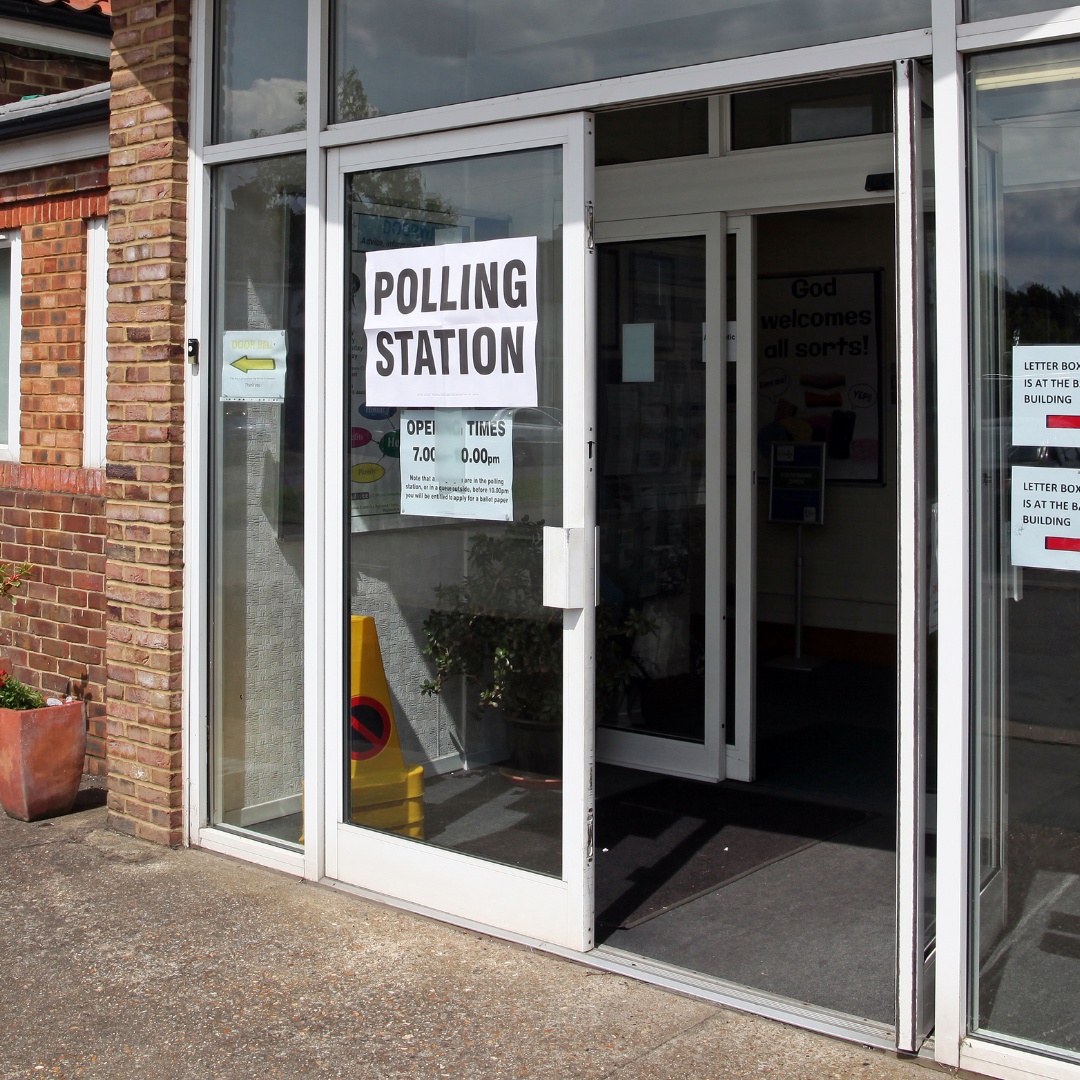
In the absence of a single political party I wholly align with, these points resonate with me. My questions are often: ‘Which choice best reflects the love of neighbour right now?’ ‘Which choice gives the best outcomes for the last, the least, and the lost?’
Where I think that a single political party is more goat than sheep, and statistically more likely to get into power and cause harm to people, I will vote for the party that is statistically most likely to prevent them. I’m always careful not to show up at the polling station and physically turn over tables when I vote, mind you. My local library hates it when I do that.
Of course we can’t predict how Christians will vote. The 2024 research didn’t include voting‑intention data, but the combined findings do allow us to make a cautious observation about how the policies of different parties resonate with different Christian priorities, balancing socially conservative concerns with social justice commitments.
The research suggests, based only on main UK political parties, that the order of most likely to least likely to attract Christian voters looks like this:
Labour – strong on social justice; weaker on conservative moral issues
Conservative – strong on moral conservatism; mixed on social justice
Liberal Democrat – strong on social justice; weak on conservative moral issues
SNP / Plaid Cymru – strong on social justice; liberal on moral issues
Green – strong on social justice; least aligned with conservative moral concerns
Reform UK – strong on some moral issues; weak on social justice
Obviously, we should take the above with a pinch of salt (and light). The base research wasn’t developed to determine which parties are ‘better’ or ‘worse’ for Christians, nor was it intended to prescribe how Christians ‘should’ vote. The research also focused on national patterns (being specific to the 2024 General Election) and not local ones which vary much more widely.
Further considerations
We should always consider our voting decisions prayerfully. While it’s tempting to try to fit Jesus as neatly as possible into our own social and political worldviews, we know that Jesus both resists and transcends this. Jesus’ teachings are not politically driven. Rather, they are driven by love for God and love and compassion for our fellow human beings, for our neighbour, for our enemies. And we are to love as Jesus loves, with truth, humility and sacrifice, putting the flourishing and wellbeing of others first. That’s a radical way to see things, as I’m sure you may have heard, and it comes with responsibility and risk, even at the expense of our own prosperity and comfort.
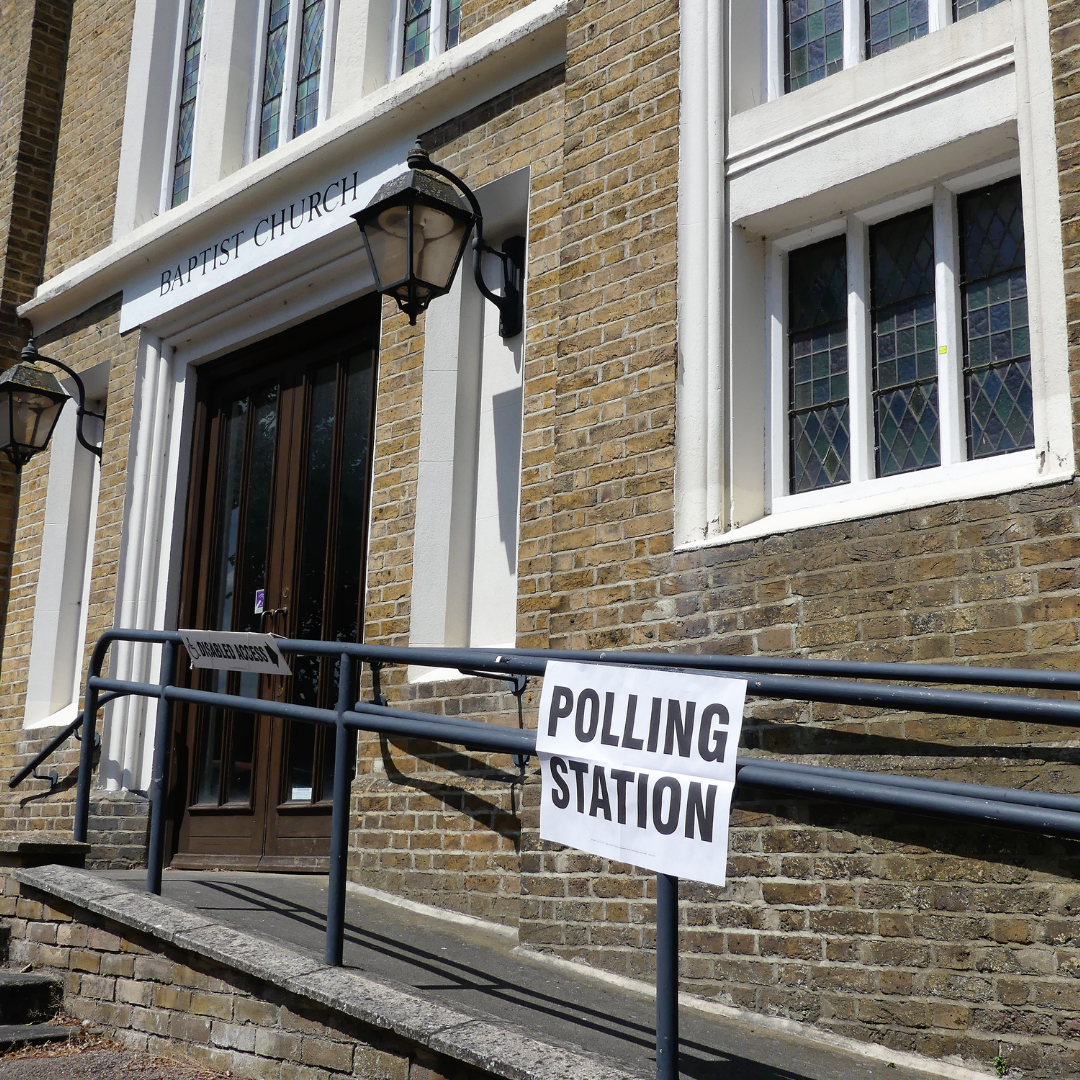
I think we should always challenge politicians and other public figures (on every part of the political spectrum) where they try to use Jesus as a front for policies and platforms which are the antithesis of what Jesus taught. For example, I’ve comprehensively fact-checked a statement made by one MP attending a church service down in London just before Christmas and am happy to confirm that there is no ‘very real prospect of Christmas being cancelled by the woke liberati.’
You may view the intersection of religion and politics differently to me (as I’ve said before, I can’t untangle them) but I think we could agree that where Jesus is shamelessly misrepresented in public discourse we should call it out where we see it, wherever our loyalties may lie.
I think we could also agree that voting is an important, if not completely essential, thing for a Christian to do.
It is right to give thanks and praise. It is right to do politics and vote.
Sources
Local Elections 2026
BBC - What you need to know about the 7 May elections in England, Scotland and Wales: https://www.bbc.co.uk/news/articles/c62nq678nyzo
Democracy Club - 2026 local election data summary: https://democracyclub.org.uk/blog/2026/04/13/2026-local-election-data-summary/
Open Council Data - Councils with 2026 Elections (134+2): https://opencouncildata.co.uk/elections.php
General Election 2024
· Christian Institute - Election Briefing 2024: https://www.christian.org.uk/wp-content/uploads/ElectionBriefing2024.pdf
· Evangelical Alliance - Thinking faithfully about politics: https://www.eauk.org/assets/files/downloads/General-Election-report-2024-A5-WEB.pdf
· Religion Media Centre - General Election 2024: the Christian vote: (https://religionmediacentre.org.uk/news/general-election-2024-the-christian-vote/
About
Simon Carter is a writer, storyteller and licenced lay minister in training based in Nottingham, UK. He writes his thoughts about faith, spirituality and social justice on his blog simoncarterstuff.uk